Fat Frog Yoga - Move Well Series
Why looking after your Neck and Shoulders matter more than you think!
Helping you build strength, reduce tension and move more comfortably through yoga.
Fat Frog Yoga - Move Well Series
Why looking after your Neck and Shoulders matter more than you think!
Helping you build strength, reduce tension and move more comfortably through yoga.
5 minute read
Beginner Friendly
Chair Adaptations
Practical Tips
Discover why neck and shoulder tension develops, how stress and everyday habits affect your body, and how practical, accessible yoga can help.
Have you ever reached the end of the day, rolled your shoulders and suddenly realised they have been creeping up towards your ears for hours? Perhaps you notice yourself rubbing the back of your neck after a stressful meeting, a long drive, or one of those “I’ll just quickly reply to this email” moments that somehow turns into an hour hunched over the laptop.
The funny thing is, most of us don’t really notice our neck and shoulders until they begin to complain, even though they are quietly doing an enormous amount for us every single day. They support the weight of your head, which is heavier than you might think, help you look around safely when crossing the road or reversing the car, and allow you to reach, lift, carry, cuddle, garden, type and cook; or in other words, to move through everyday life. The trouble is, modern life is not always particularly kind to them.
So this month in my Chesterfield yoga classes, we’re giving our necks and shoulders some well-deserved attention. We are not in pursuit of “perfect posture”, but in a practical, real-life way that works with your body exactly as it is today. Whether you’re dealing with neck pain, shoulder tension, or that familiar stiffness that creeps in after a full day of simply life’ing’, you’re in the right place.
In this post:
Click the chapter titles below to skip to that section

Meet your neck & shoulders

Why do we get so tight?

Stress & Your Body
Neurodivergence & Tension

Why it matters
7 habits for happier shoulders

How yoga can help

Try this today
Meet Your Neck and Shoulders (without the latin)
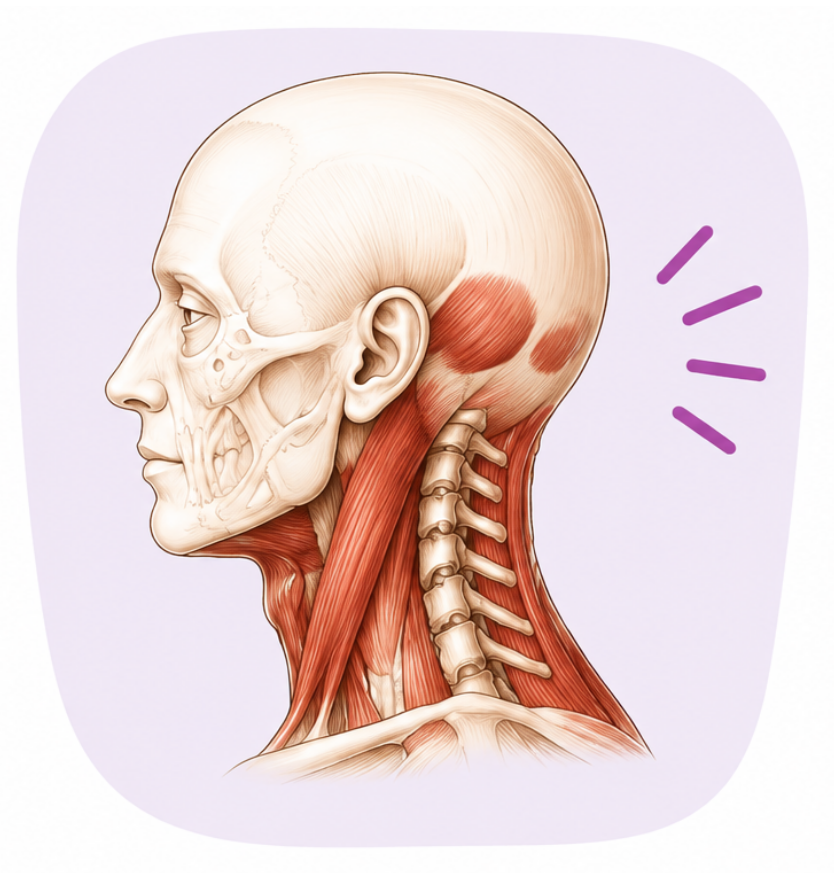
Your Neck:
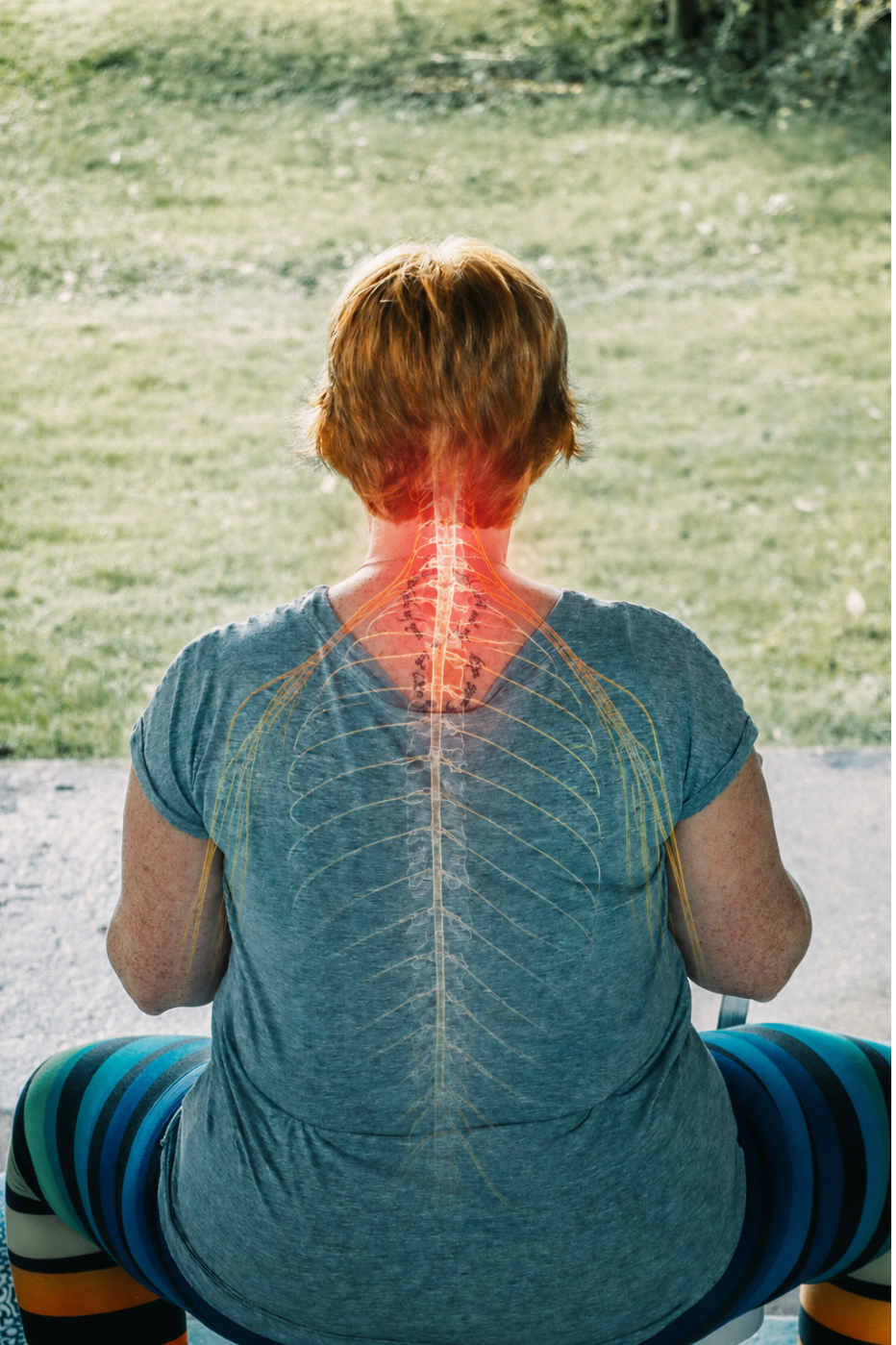
Your neck is a stack of small bones (your spine) plus a whole team of muscles that work together to do three big jobs:
- Supports your head – Your head weighs roughly 4.5–5.5kg (about the weight of a bowling ball). That’s a lot to balance all day.
- Lets you move – Turn to look over your shoulder, nod, tilt your head, look up at the sky. Your neck makes all of that possible.
- Protects important stuff – Your spinal cord runs through there, carrying messages between your brain and the rest of your body.
So if your neck feels a bit “over it” sometimes… it’s not being dramatic.
Your Shoulders:
Your shoulders are brilliant, but again, they can also be a little bit needy.
They’re often described as the most mobile joints in the body, which means they are designed for movement rather than being held in one position for hours at a time. Unlike the hip, which is built to be sturdy and weight-bearing, the shoulder depends on a whole network of muscles working together to keep it stable.
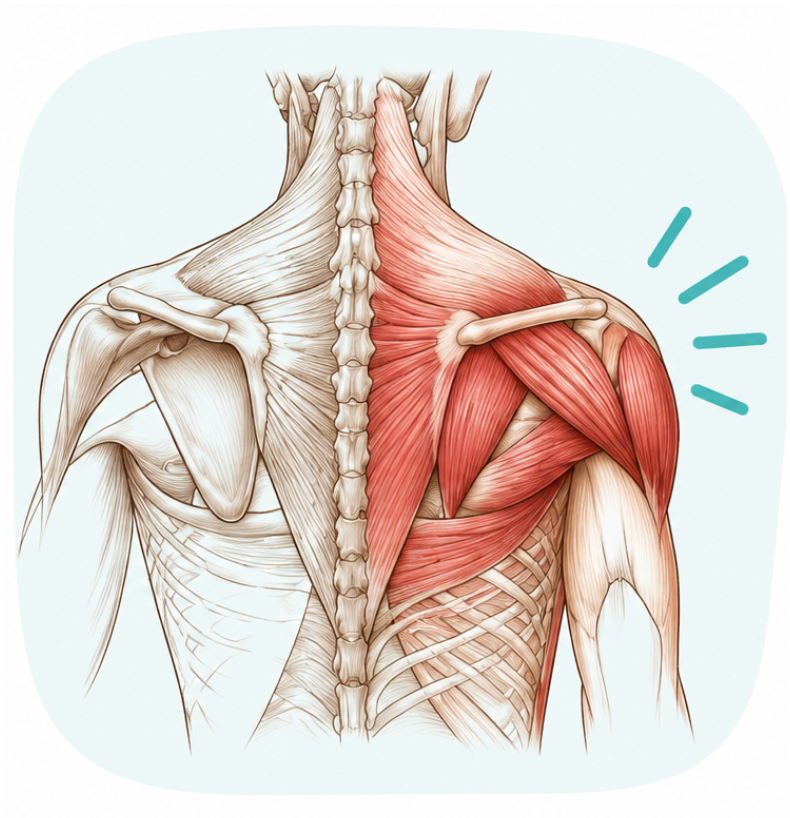
A few muscle names you might recognise (or have been blamed for your aches before):
- Trapezius (the big one across your upper back and neck)
- Levator scapulae (often involved in that “tight knot” feeling near the top of the shoulder blade)
- Rotator cuff (a group of smaller stabilising muscles)
- Deltoids (the rounded shoulder muscles)
When all of these muscles are working well together, your shoulders can feel both free and strong, but when they become tired, tense or held in the same position for too long, they have a way of making themselves known. With everything they do for us each day, it is hardly surprising that our neck and shoulders sometimes need a little extra attention.
Why do our necks and shoulders get so tight?
If you’ve ever thought, “Why am I so tense? I haven’t even done anything today,” I promise you’re not alone.
Neck pain and shoulder tension often build up from the most ordinary, everyday things. Very rarely are they from one dramatic injury.
Here are some of the biggest culprits I know (and have experienced myself):
- Desk work: sitting still, reaching for a mouse, leaning towards a screen.
- Looking down at phones: hello, “text neck”.
- Driving: hands forward, shoulders slightly lifted, jaw clenched without realising.
- Carrying bags: especially heavy handbags or tote bags on one shoulder.
- Jaw clenching: this one surprises people, but your jaw, neck and shoulders are very much in the same “stress club”.
- Sleeping position: too many pillows, too few pillows, or sleeping twisted like a pretzel.
- Carrying children (or grandchildren): lovely, but heavy. More often than not, done on one hip with one shoulder doing all the work.
- Stress: the BIG one!!
A quick stress fact (that might make you go “oh… that’s me”)
When we’re stressed, our bodies often do a few things automatically:
- we shrug our shoulders without noticing
- we tighten our jaw
- we hold our breath or breathe very shallowly
And here’s the kicker: many people hold onto that tension for hours, not because they are doing anything wrong, but simply because the body gradually becomes used to it. This is one of the reasons yoga can be so helpful. No it will not magically “fix” you, but because it encourages greater body awareness, helping you notice what your body is doing before that tension develops into a full-blown ache.
Did you know that shoulder and neck pain very common when you are neurodivergent?
For some neurodivergent people, tension around the neck and shoulders can be a particularly familiar feeling. Autism and ADHD can affect how we experience stress, sensory input and the signals coming from our own bodies, and that may show up physically in several ways, including:
- Increased muscle tension
- Jaw clenching
- Not noticing tension until it has already built up (sometimes called poor interoception)
- Sensory overwhelm being felt physically in the body
Some neurodivergent people are also hypermobile, meaning their joints naturally move beyond the typical range. When joints need a little more support, the surrounding muscles may have to work harder to keep the body stable, which can sometimes contribute to an ongoing feeling of tightness or fatigue. Of course, this will not apply to everyone, and there is no single neurodivergent experience. However, if any of this feels familiar, it may help to know that there can be more going on than simply “sitting badly” or forgetting to stretch.
Why looking after them matters (it’s not just about pain)
When your neck and shoulders are moving well (and not constantly tense), it can help with things like:
- Driving safely (turning your head comfortably)
- Sleeping better (less tossing and turning)
- Reaching cupboards without that sharp “ooh” feeling
- Gardening without your shoulders seizing up
- Playing with grandchildren (or just being able to scoop someone up for a cuddle)
- Carrying shopping without feeling lopsided
- Working more comfortably at a desk
Feeling more confident in your posture (not stiff and “pulled back”, but open and at ease).
This is what I mean when I talk about yoga for real life: not fancy poses or perfect alignment, but simply helping your body do the things you genuinely need it to do with a little more comfort and ease.
Seven everyday habits for happier shoulders
I love the idea of a big life overhaul as much as the next person, but let’s be honest: most of us simply don’t have the time. Instead, here are seven small, realistic habits that can make a genuine difference over time, particularly if you’re dealing with shoulder stiffness or that familiar, nagging feeling of tightness across the top.
1) Change position often
If you take one thing from this post, let it be this:
Movement is more important than perfect posture. You can have the “best” posture in the world, but if you stay there for two hours, your body will still get grumpy.
Try this instead:
- Stand up for a minute
- Roll your shoulders
- Look away from the screen
- Stretch your arms overhead
Little and often beats one big stretch once a week.
2) Let your shoulders relax (yes, really)
This sounds obvious, but most people don’t realise how often they’re holding their shoulders up.
A few times a day, check in:
- Are your shoulders creeping towards your ears?
- Can you soften them down your back?
You don’t need to force them “down”. Just let them drop.
3) Lift your phone
If you’re looking down at your phone, your neck is doing extra work.
A simple tweak:
- Bring your phone up closer to eye level
- Prop it on something when you can
It’s a small change, but it can really help reduce “text neck” and the build-up of neck pain over time.
4) Strength matters (more than stretching)
A lot of people assume that tight shoulders simply need more stretching, and sometimes that is true, but tightness can also be a sign that the muscles are working hard to support and stabilise you. Strengthening, particularly through the upper back and shoulder stabilisers, can help your shoulders feel better supported and a little less “on edge”.
5) Breathe (not a lesson, just a reminder)
When we’re stressed, we often breathe high up in the chest.
Try this a couple of times a day:
- Let your breath slow down
- Feel your ribs expand a little
- Soften your jaw
Relaxed breathing can reduce unnecessary shoulder tension and neck tightness. Best bit is it only takes seconds!
6) Think about your sleep set-up
You don’t need to find the perfect pillow, but it does help if your neck is not being held at an awkward angle throughout the night. Try to avoid piling up several pillows if they push your chin towards your chest, and aim instead for your neck to feel comfortably supported rather than “cranked” into position. If you regularly wake up with stiffness or discomfort, it may be worth experimenting with different pillow heights to find what feels best for you.
7) Move every day (even five minutes counts)
This is where yoga can be particularly helpful, although it does not have to mean committing to a full class. A few shoulder rolls, gentle twists, arm circles or a short stretch can be enough to keep the area moving, and those small movements really do count.
How yoga helps (and it’s not about touching your toes)
Yoga can help neck pain and shoulder stiffness in a few different ways — and the best part is, it’s not just one thing.
It can support:
- Mobility (helping joints move more freely)
- Flexibility (lengthening muscles that feel tight)
- Strength (supporting the joints so they don’t feel as vulnerable)
- Posture awareness (not “sit up straight!”, but noticing habits)
- Breathing (which affects tension more than people realise)
- Body awareness (catching tension early)
- Relaxation (because stress lives in the body)
If you’re searching for yoga for neck pain , I’ll say this upfront: it shouldn’t feel like you’re forcing your body into shapes. The aim is to help your neck and shoulders feel more supported, more mobile, and a bit less “braced” against the day.
My focus is simple: helping real bodies feel better in everyday life, whether that means chair-based movement, mat work or learning how to relax your shoulders without forcing them. However it looks for you, it all counts.
Yoga can be adaptive (and it’s allowed to meet you where you are)
One of the biggest myths about yoga is that you have to do it a certain way for it to “count”.
You don’t.
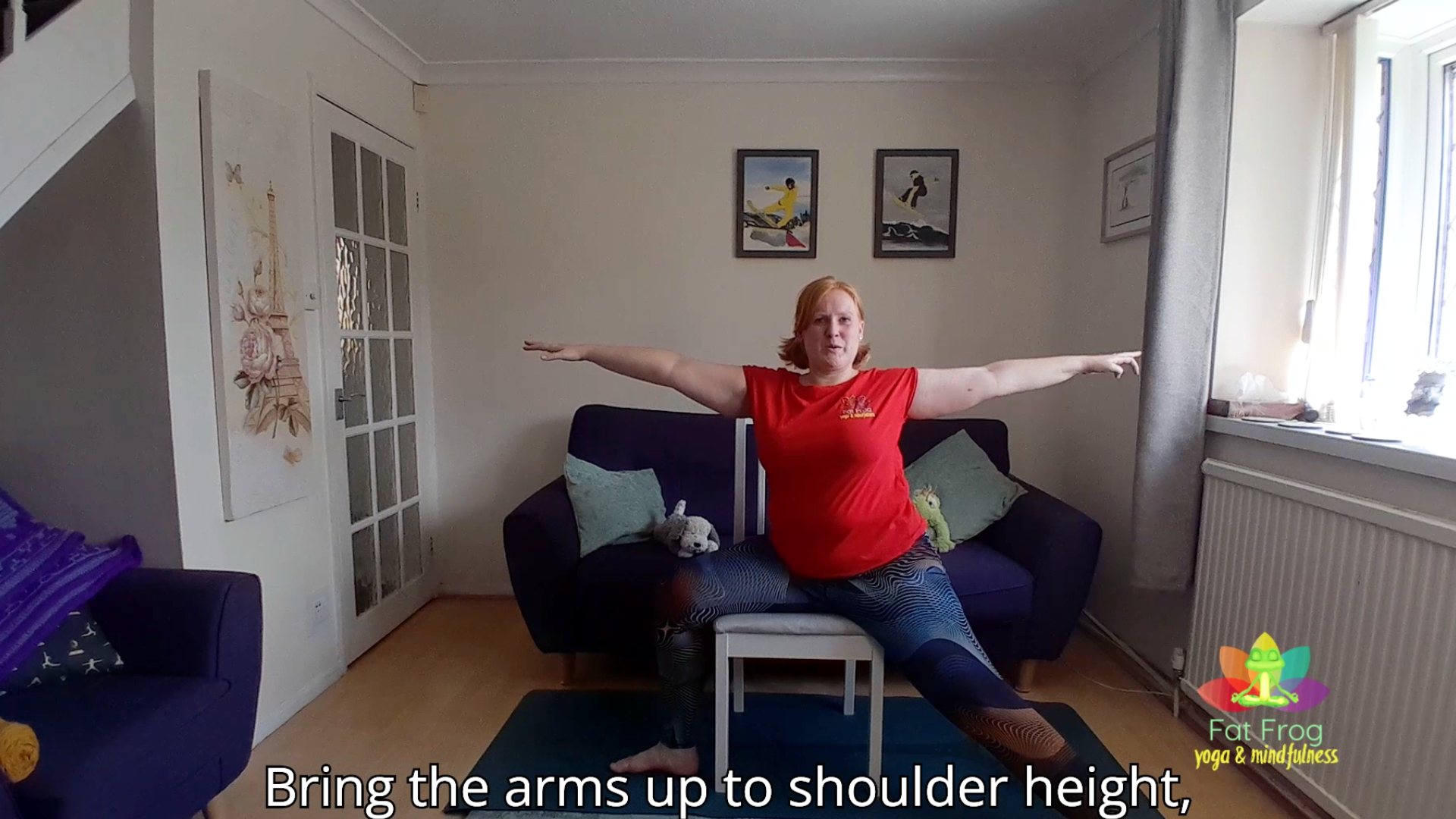
Yoga can be adapted in all sorts of ways: it can be practised seated or standing, supported by a wall, or with the help of cushions, blocks, straps or a chair. It can involve small, gentle movements rather than big shapes, and it can be slower, steadier and kinder on the days when your body or your brain is already doing a lot. At Fat Frog Yoga, that is the whole point: making yoga accessible for all bodies and minds. So, if you have ever felt that yoga classes were not made for you because of pain, stiffness, anxiety, menopause symptoms, neurodivergence, changes in mobility, or simply because you do not want to be told to “push through”, please know that there is another way. You are allowed to adapt, you are allowed to rest, and you are allowed to practise yoga in a way that genuinely supports you.
Try this today (a 30-second check-in)
Here’s a little challenge you can try today.
Every time you boil the kettle (or make a cuppa, or wait for the microwave), take a quick check-in:
- Where are my shoulders?
- Can I soften my jaw?
- Can I take one slow breath?
- Can I gently roll my shoulders?
It takes less than thirty seconds, but those tiny moments of checking in with your body can add up to a meaningful difference over time.
When to get it checked (just in case)
Most episodes of neck and shoulder discomfort are not caused by anything serious and often improve with time, appropriate movement and everyday self-care. However, it is sensible to speak to a GP or another appropriate healthcare professional if:
- The pain or stiffness is not improving after a few weeks
- The pain is becoming worse or is difficult to manage
- You develop pins and needles, numbness or weakness in an arm or hand
- The pain began after a fall, collision or other significant injury
- You feel generally unwell alongside the neck pain
- You are concerned about your symptoms for any reason
Seek urgent medical advice if you develop worsening weakness or numbness, clumsiness in your hands, difficulty walking or balancing, or neck pain accompanied by a severe or unusual headache.
This information is general and is not a substitute for individual medical assessment.
Ready to Give Your Neck & Shoulders Some TLC?
If you’re ready to put these ideas into practice, head over to our Resources page where you’ll find two Access for Life yoga classes created specifically to help care for your neck and shoulders. Whether you’re looking to gently release tension or build strength and stability, these 60-minute sessions are yours to keep for just £15 each, so you can return to them whenever your body needs a little extra support.
Prefer to practise with others? We also run welcoming in-person yoga classes where you can enjoy expert guidance, adapt movements to suit your body, and become part of our supportive Fat Frog Yoga community.
Practical yoga for real life - Closing thoughts from me
Looking after your neck and shoulders is not about chasing perfect posture or becoming incredibly flexible; it is about helping everyday tasks feel that little bit easier, whether that means reversing the car, reaching into a cupboard, enjoying a walk or simply ending the day feeling less tense than when you started. Small, consistent habits really can make a meaningful difference, and if you would like a little guidance or a friendly nudge to actually do the things you already know help, this month’s classes are focused on building strength, mobility and confidence in a way that is achievable, accessible and designed for real life.
If you have any questions, or there is a particular neck or shoulder niggle you would love me to cover, just pop me a message, as I am always happy to help.
Fay xx